.png)
Choosing a playground surface often comes down to a classic tradeoff: upfront savings versus long-term ownership costs. Get this calculation wrong, and a budget-conscious project can quietly turn into an accessibility liability and a maintenance headache down the road.
Here's how Robertson Recreational Surfaces breaks down the real cost of Engineered Wood Fiber (EWF) versus poured-in-place rubber, so you can choose based on what your site can actually support, not just what's cheapest on day one.
Two Different Financial Philosophies
EWF and PIP aren't just different materials. They represent two different ownership models.
EWF is maintenance-driven. It's inexpensive to install, but it asks for consistent, ongoing attention to perform well over time.
PIP is investment-driven. It costs more upfront, but it's built to perform predictably with minimal day-to-day intervention.
A useful way to frame it: EWF is like bringing home a high-energy pet. Low cost of entry, but it needs daily care to thrive. Robertson's TotTurf poured-in-place systems work more like a premium appliance: the initial investment is bigger, but it's built for consistent, low-effort performance once it's in place.
The EWF Maintenance Trap
EWF's total cost of ownership depends almost entirely on upkeep.
Because foot traffic constantly displaces wood fiber, Robertson's Engineered Wood Fiber requires ongoing raking and occasional topping off to stay compliant. Skip that upkeep, and ruts form in high-traffic zones, especially under swings, undermining accessibility for wheelchairs and mobility devices and driving up corrective costs later. Rubber wear mats and playground borders help contain the damage, but they don't eliminate the need for a regular maintenance routine.
That raises the real question for any site considering EWF: are the upfront savings genuine, or are they an illusion that only holds up if you have staff committed to actively managing the surface?
If your organization has reliable grounds crews and a maintenance routine already in place, EWF can be a smart, cost-effective choice. If not, the "savings" may not survive contact with reality.
PIP's Predictability
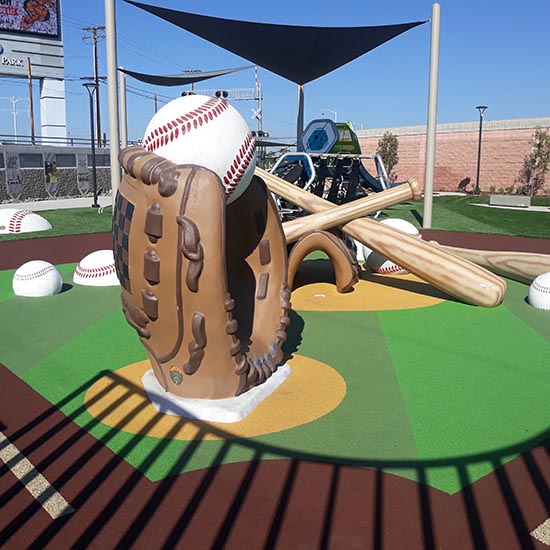
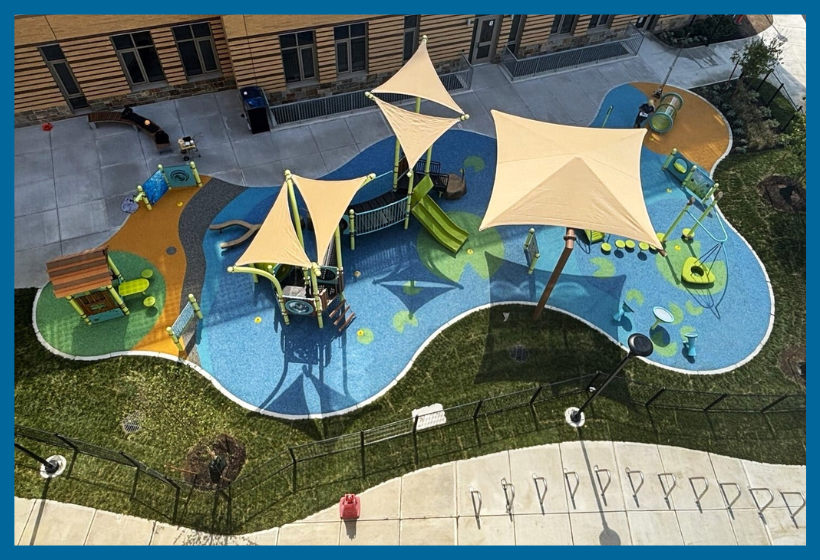
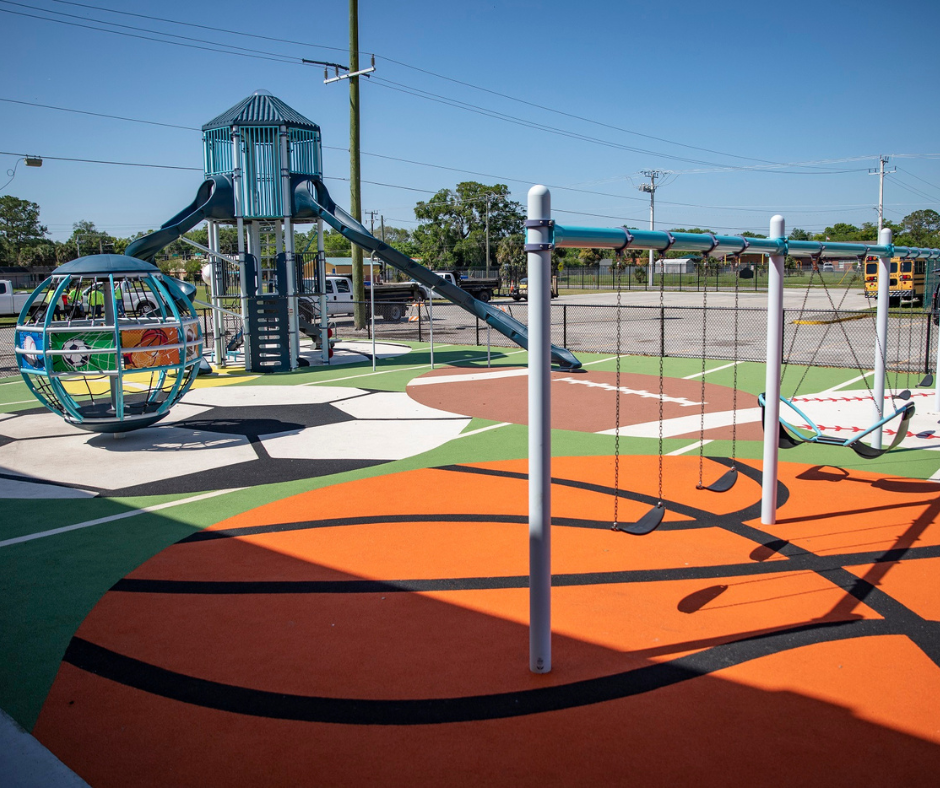
Poured-in-place rubber takes the opposite approach. Because it's a seamless, unitary surface, it doesn't displace the way loose-fill materials do.
Robertson's TotTurf systems, whether EPDM, TPV, or the reinforced TotTurf Advantage, are built to hold their shape, color, and performance over years of heavy use. Day-to-day maintenance is minimal: clearing debris is typically all that's needed between service intervals.
Periodically, the surface benefits from a professional ReFresh Roll Coat, recommended every 18 to 24 months, to strengthen the surface, add UV protection, and help prevent cracking or granulation. For surfaces further along in their lifecycle, Robertson's ReNew Re-Top service restores cushioning and repairs beyond what minor patching can fix.
The tradeoff is upfront cost. PIP requires a larger initial investment than EWF. But that cost buys predictability: consistent accessibility, fewer surprise repairs, and a surface that behaves the same way in year one and year ten.
| Engineered Wood Fiber (EWF) | Poured-in-Place (PIP) | |
| Upfront cost | Lowest of all surfacing options | Higher initial investment |
| Daily maintenance | Regular raking, ongoing management | Minimal; mostly clearing debris |
| Periodic service | Topping off as material compacts and decomposes | ReFresh Roll Coat every 18–24 months |
| Major refresh | Full re-topping as needed | ReNew Re-Top for surfaces beyond minor repair |
| Accessibility risk | High if maintenance lapses (ruts, uneven depth) | Low; surface stays seamless and consistent |
| Best fit | Sites with dedicated grounds staff and a maintenance routine | Sites that want predictable, low-effort long-term performance |
| Robertson product | Loose Fill / EWF | TotTurf Poured-in-Place |
Which Surface Fits Your Project?
Here's the real decision framework:
-
Choose EWF if you have committed maintenance staff, a lower upfront budget, and a site where periodic top-offs are realistic to schedule and staff.
-
Choose PIP if you want minimal daily upkeep, guaranteed accessibility over time, and you're able to absorb a higher initial cost in exchange for long-term predictability.
The Bottom Line
EWF wins on day-one savings. PIP wins on long-term predictability and consistent accessibility. The right choice isn't about which material is "better," it's about matching the surface to the maintenance capacity you actually have, not the one you wish you had.
Not sure which surface fits your site? Try Robertson's Surface Selector or request a quote to talk through your project's traffic, budget, and maintenance capacity.