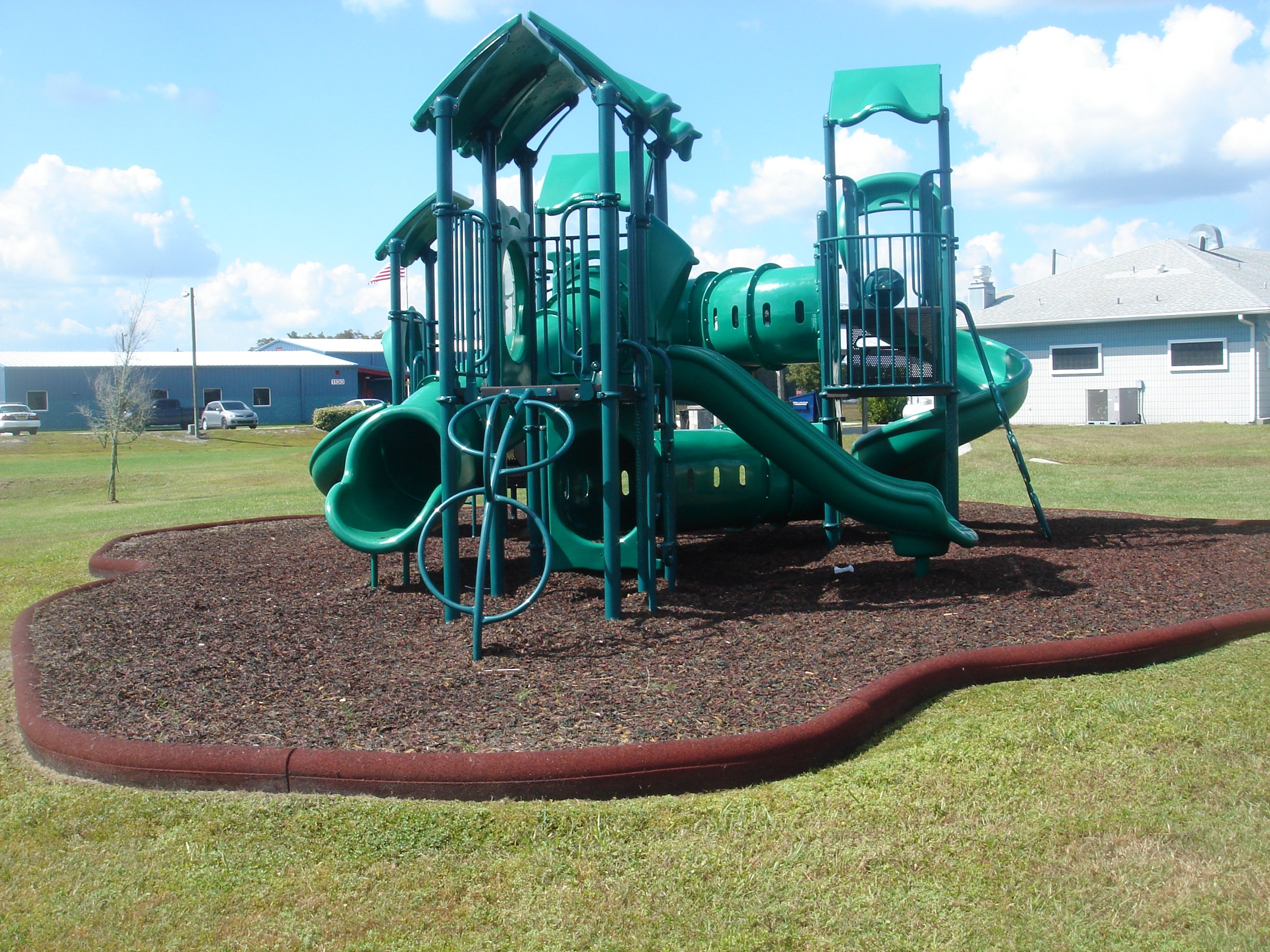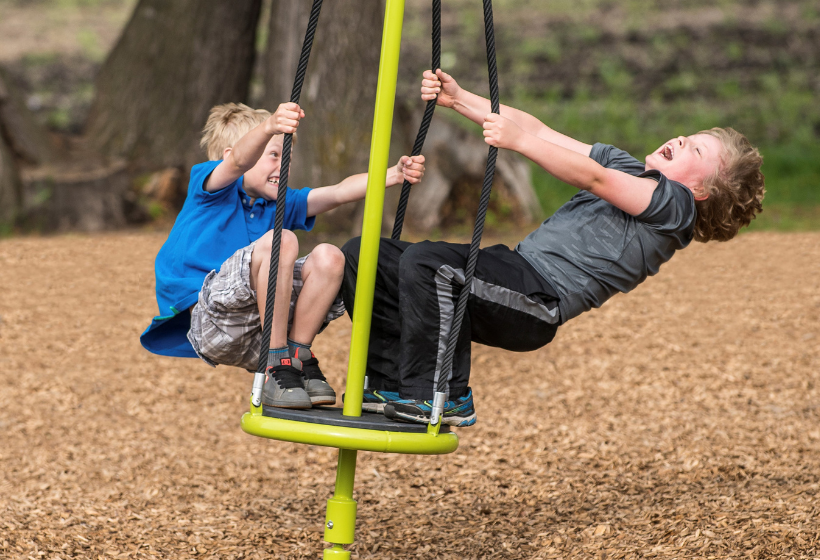
Playgrounds are designed to be havens for fun. They are a place where kids can run free, make friends, and learn problem-solving skills!
Help Me Grow says, “Unstructured play allows children the freedom to explore, create and discover without predetermined rules or guidelines. It’s been shown to foster cognitive development while boosting physical development and social and emotional development. It specifically helps creativity and imagination, problem-solving abilities and social skills.”
Gone are the days of monkey bars, swelteringly hot metal slides, and tough landings under the swingset!
As adults, it is our responsibility to ensure that playground safety is the primary concern when developing new play areas. Thankfully, there are numerous resources and guidelines in place to make this process simple and clear!
Key Takeaways
- Playgrounds are vital for child development — unstructured play supports cognitive, physical, social, and emotional growth, including creativity, problem-solving, and social skills.
- Playground injuries are a serious concern — the CDC reports over 200,000 emergency department visits per year for children 14 and under due to playground-related injuries.
- Protective surfacing is the first line of defense — surfaces should have at least 12 inches of loose-fill material or safety-tested rubber to match the critical fall height of the equipment.
- Surface coverage matters — protective surfacing must extend at least 6 feet in all directions from equipment, and twice the height of the suspending bar in front and behind swings.
- Ongoing maintenance extends playground life — regular upkeep of equipment and surfaces keeps playgrounds safe, functional, and accessible for years.
Improper Protective Surfaces – Inspect Your Playground!
.png?width=820&height=560&name=Recreational%20safety%20surfaces%20(9).png)
According to the Centers for Disease Control and Prevention, each year in the United States, emergency departments treat more than 200,000 children ages 14 and younger for playground-related injuries.
At Robertson, we specialize in manufacturing surfacing materials and providing resources to contribute to safe playgrounds. However, the steps are not always clear for new clients to properly use our materials to contribute to safe environments.
Thankfully, the United States Consumer Product Safety Commission has made a simple playground safety checklist to follow:
-
Make sure playground surfaces around equipment have at least 12 inches of wood chips, mulch, sand, or pea gravel, or are mats made of safety-tested rubber or rubber-like materials. The critical fall height is an important measurement of the length of fall from any point on the playground equipment. You want to ensure that the playground surface is the correct depth so that if a child falls from the playground, they can fall onto the playground surface safely.
-
Check that protective surfacing extends at least 6 feet in all directions from play equipment. For swings, be sure surfacing extends, in back and front, twice the height of the suspending bar.
-
Make sure play structures more than 30 inches high are spaced at least 9 feet apart. This limits the ability to perform dangerous jumps from one high play structure to another.
-
Check for dangerous hardware, like open “S” hooks or protruding bolt ends. It’s important to manually inspect your playground annually to see if it meets your safety standards.
-
Make sure spaces that could trap children, such as openings in guardrails or between ladder rungs, measure less than 3.5 inches or more than 9 inches.
-
Check for sharp points or edges in playground equipment.
-
Look out for tripping hazards, like exposed concrete footings, tree stumps, and rocks.
-
Make sure elevated surfaces, like platforms and ramps, have guardrails to prevent falls.
-
Check playgrounds regularly to see that equipment and surfacing are in good condition.
-
Carefully supervise children on playgrounds to make sure they’re safe. Click this link to read on how to develop a playground supervision plan.
Playground Safety Case Study: Casanova Park
Casanova Park, in beautiful San Mateo, California, is a great example of a modern, fun, and safe playground. As you can see, there is a clear line of sight in every direction which allows adults to supervise their children from anywhere in the park.
In addition, proper spacing of playground equipment and adequate surfacing below each obstacle makes this playground a haven for fun and community building! Casanova Park also highlights TotTurf’s customizable Poured Rubber, which is available in a variety of unique colors and combinations.
Maintaining your Playground
Developing and building your playground with safety with all the necessary safety precautions is the responsible thing to do, but it doesn’t end there. Making sure that the obstacles, surroundings, and surfaces that comprise your playground are properly maintained is of the utmost importance!
Not only is this a fantastic way to keep people excited about the park for years to come, but scheduling regular maintenance ensures that your playground will be functional and accessible for years to come.
Request a Quote
Lucky for you, Robertson Recreational Surfaces has multiple maintenance programs available as a resource for TotTurf clients. Whether you need a fresh coat of Refresh Roll Coat to seal poured-in-place rubber surface or a hole that needs patching, we have the solution!
Not sure which surface is correct for your playground? Check out our Comparing Surface Types page!
Frequently Asked Questions
Here's a few FAQs based on the blog in case you missed it.
What is critical fall height?
Critical fall height is the maximum fall distance from any point on a piece of playground equipment. The surfacing depth must be sufficient to safely absorb the impact of a child falling from that height.
How far should protective surfacing extend around playground equipment
Surfacing should extend at least 6 feet in all directions from any play equipment. For swings specifically, it must extend both in front and behind the swing by a distance equal to twice the height of the suspending bar.
How far apart should playground structures be spaced?
Play structures taller than 30 inches should be spaced at least 9 feet apart to prevent children from making dangerous jumps between structures.
What should I look for during a playground safety inspection?
Key items to check include: open "S" hooks or protruding bolts, sharp edges, tripping hazards (exposed footings, stumps, rocks), gaps that could trap children (should be under 3.5" or over 9"), missing guardrails on elevated surfaces, and the overall condition of surfacing and equipment.
How often should playgrounds be inspected and maintained?
Playgrounds should be checked regularly for wear and safety concerns, with at least an annual manual inspection. Routine maintenance — such as recoating or patching poured-in-place rubber surfaces — helps ensure long-term safety and usability.
What maintenance options are available for playground surfacing?
Robertson Recreational Surfaces offers maintenance programs including Refresh Roll Coat for sealing poured-in-place rubber and patch repair solutions for damaged areas.

.jpg)